
- Birding review by Tristan Spurway - a bird guide
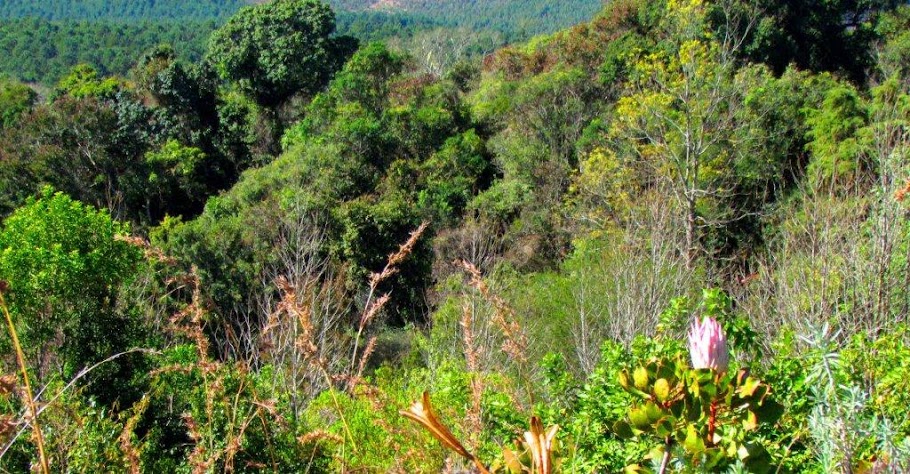
- The forest in Stanford Lake Lodge is an amazing birding spot that I'd suggest to any birders novice or expert. The forest inside is amazing, filled with beautiful trees, flowers and an array of birds. In the space of two days I saw many rare and difficult to see birds including the Orange Ground Thrush, Narina Trogon, the Blue Mantled Crested Flycatcher, the White-Breasted and Grey Cuckooshrikes, the Square-Tailed Drongo, Black Fronted Bushshrike and lots of Knysna Turacos! The trails that you follow are beautiful and are placed in such a away that you are in the interior of the forest and are in a prime birding spot. One of these trails can be walked as an afternoon stroll or all of them as a whole day birding adventure! The trails are well maintained and allow for an easy walk through the forest. I would say that the Stanford Lake Lodge is a must stay for any keen birder and that you will be greatly rewarded with amazing sightings, I can guarantee that you will see at least one of the species that I have listed on a short walk through the forest.
Here is my latest Stanford Lake Lodge bird list:
Key:
Su- Summer Migrant
Wi- Winter Migrant
En- Southern African Endemic
NEn-Near endemic
T- Threatened species
1- Common
2-Fairly common
3-Uncommon
4-Rare or very few records
5-Unrecorded but possible Species with a 5 have not been personally observed in surveys but are strong possibilities in future.
1. Helmeted Guineafowl-1
2. Natal Spurfowl-1,NEn
3. Red-winged Francolin-5
4. Common Quail-5,Su
5. Common Buttonquail-3
6. White-faced Whistling Duck-3
7. Spur-winged Goose-4
8. Egyptian Goose-1
9. Yellow-billed Duck-2
10.African Black Duck-1
11. Southern Pochard-4
12.Red-billed Teal-3
13.Little Grebe-1
14.Woolly-necked Stork-1
15.Black Stork-3
16.African Openbill-5
17.White Stork-3,Su
18.African Sacred ibis-4
19.Hadeda Ibis-1
20.Little Bittern-4
21.Hamerkop-2
22.Striated Heron-3
23.Western Cattle Egret-3
24.Intermediate Egret-5
25.Great Egret-5
26.Little Egret-3
27.Grey Heron-1
28.Black-headed Heron-1
29.Goliath Heron-5
30.Purple Heron-3
31.Reed Cormorant-1
32.White-breasted Cormorant-2
33.African Darter-1
34.African Fish Eagle-2
35.African Cuckoo-hawk-4
36.European Honey Buzzard-4,Su
37.Bat Hawk-4,T
38.African Harrier-Hawk-2
39.Black-winged Kite-2
40.Yellow-billed Kite-2,Su
41.Cape Vulture-3,T
42.Black-chested Snake Eagle-4
43.Lizard Buzzard-5
44.African Goshawk-2
45.Little Sparrowhawk-2
46.Black Sparrowhawk-3
47.Rufous-breasted Sparrowhawk-3
48.Common Buzzard-2,Su
49.Forest Buzzard-3,Wi,En
50.Jackal Buzzard-3,En
51.Tawny Eagle-4,Su
52.Crowned Eagle-3,T
53.Verraux's Eagle-5,T
54.Long-crested Eagle-2
55.Rock Kestrel-3
56.Lesser Kestrel-5
57.Greater Kestrel-5
58.Amur Falcon-4
59.Eurasian Hobby-4
60.Lanner Falcon-5
61.Peregrine Falcon-5
62.Buff-spotted Flufftail-4
63.Red-chested Flufftail-3
64.Striped Flufftail-5
65.Black Crake-2
66.Common Moorhen-1
67.Red-knobbed Coot-1
68.African Rail-4
69.African Jacana-3
70.African Snipe-4
71.Rock Dove-4
72.African Olive Pigeon-1
73.Lemon Dove-2
74.Red-eyed Dove-1
75.Tambourine Dove-2
76.Knysna Turaco-1,En
77.Purple-crested Turaco-3
78.Burchell's Coucal-2,NEn
79.Diederik Cuckoo-3,Su
80.Klaas's Cuckoo-3,Su
81.African Emerald Cuckoo-3,Su
82.Black Cuckoo-2,Su
83.Red-chested Cuckoo-2,Su
84.African Cuckoo-5,Su
85.Western Barn Owl-2
86.African Wood Owl-3
87.Spotted Eagle Owl-2
88.Fiery-necked Nightjar-4
89.Common Swift-4,Su
90.African Black Swift-3,Su
91.Alpine Swift-3
92.African Palm Swift-4
93.Little Swift-3
94.Horus Swift-5,Su
95.White-rumped Swift-4
96.Speckled Mousebird-1
97.Red-faced Mousebird-3
98.Narina Trogon-2
99.European Roller-4,Su
100. Brown-hooded Kingfisher-1
101. Malachite Kingfisher-2
102. Half-collared Kingfisher-5
103. African Pygmy Kingfisher-5,Su
104. Giant Kingfisher-2
105. Pied Kingfisher-1
106. White-fronted Bee-eater-5
107. European Bee-eater-2,Su
108. African Hoopoe-3
109. Green Wood Hoopoe-5
110. Black-collared Barbet-3
111. Brown-backed Honeybird-3
112. Lesser Honeyguide-3
113. Scaly-throated Honeyguide-3
114. Red-throated Wryneck-5
115. Golden-tailed Woodpecker-2
116. Olive Woodpecker-1
117. Cardinal Woodpecker-4
118. Cape Parrot-3,T,En
119. Cape Batis-1,En
120. Black-fronted Bushshrike-2
121. Olive Bushshrike-1,NEn
122. Black-backed Puffback-1
123. Southern Boubou-1,En
124. Brown-crowned Tchagra-3
125. Grey Cuckooshrike-2
126. Black Cuckooshrike-3
127. Southern Fiscal-1
128. Red-backed Shrike-3,Su
129. Lesser Grey Shrike-3,Su
130. Black-headed Oriole-2
131. Square-tailed Drongo-1
132. African Paradise Flycatcher-2,Su
133. Blue-mantled Crested Flycatcher-2
134. Pied Crow-2
135. White-necked Raven-3
136. Cape Crow-4
137. Dark-capped Bulbul-1
138. Yellow-streaked Greenbul-1
139. Yellow-bellied Greenbul-3
140. Terrestrial Brownbul-3
141. Black Saw-wing-2
142. Brown-throated Martin-3
143. Sand Martin-5,Su
144. Rock Martin-3
145. Banded Martin-4,Su
146. Barn Swallow-1,Su
147. Pearl-breasted Swallow-3
148. Common House Martin-3,Su
149. White-throated Swallow-1
150. Wire-tailed Swallow-3
151. Lesser Striped Swallow-2,Su
152. Greater Striped Swallow-2,Su
153. Red-breasted Swallow-5
154. Cape Grassbird-1,En
155. Yellow-throated Woodland Warbler-2
156. Willow Warbler-3,Su
157. Lesser Swamp Warbler-2
158. African Reed Warbler-2
159. Sedge Warbler-4,Su
160. Little Rush Warbler-2
161. Barratt's Warbler-1,En
162. African Yellow Warbler-2
163. Fan-tailed Grassbird-4,T
164. Lazy Cisticola-4
165. Red-faced Cisticola-5
166. Levaillant's Cisticola-1
167. Zitting Cisticola-3
168. Tawny-flanked Prinia-1
169. Drakensberg Prinia-2,En
170. Bar-throated Apalis-1
171. Yellow-breasted Apalis-3
172. Green-backed Camaroptera-1
173. Bush Blackcap-5,En,T
174. Cape White-eye-1
175. Red-winged Starling-3
176. Orange Ground Thrush-3,T
177. Kurrichane Thrush-2
178. Olive Thrush-2
179. White-starred Robin-2
180. Chorister Robin-chat-2,En
181. Cape Robin-chat-1
182. Brown Scrub Robin-2,En
183. African Stonechat-1
184. Southern Black Flycatcher-3
185. Fiscal Flycatcher-2,En
186. Spotted Flycatcher-3,Su
187. African Dusky Flycatcher-1
188. Amethyst Sunbird-1
189. Southern Double-collared Sunbird-1,En
190. Greater Double-collared Sunbird-1,En
191. Collared Sunbird-3
192. Thick-billed Weaver-1
193. Spectacled Weaver-2
194. Holub's(African) Golden Weaver-3
195. Cape Weaver-2
196. Southern Masked Weaver-2
197. Red-headed Quelea-2
198. Yellow-crowned Bishop-3
199. Yellow Bishop-1
200. Southern Red Bishop-1
201. Red-collared Widowbird-2
202. Green Twinspot-2
203. African Firefinch-1
204. Blue Waxbill-4
205. Common Waxbill-1
206. Orange-breasted Waxbill-5
207. Swee Waxbill-1,En
208. Bronze Mannikin-1
209. Red-backed Mannikin-3
210. Dusky Indigobird-2
211. Pin-tailed Whydah-1
212. Cape Wagtail-1
213. African Pied Wagtail-2
214. Mountain Wagtail-4
215. African Pipit-3
216. Nicholson's Pipit-5
217. Buffy Pipit-5
218. Plain-backed Pipit-5
219. Forest Canary-2,En
220. Streaky-headed Seedeater-1
221. Cape Canary-1,En
222. Yellow-fronted Canary-4
223. Brimstone Canary-5
224. Cinnamon-breasted Bunting-5
- Bird Hide


- The area with bracken

- The area with the ferns and low bushes that is found on the slopes that border Stanford Lake will offer the following birds:
 The Tawny-flanked Prinia (Prinia subflava) is a small passerine bird belonging to the genus Prinia in the family Cisticolidae, a family of Old World warblers. It is widespread and common in most parts of Africa south of the Sahara. The Plain Prinia (P. inornata) of southern Asia was formerly included in this species but is now usually considered to be a separate species.
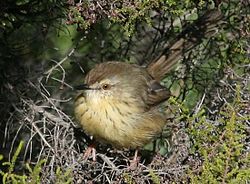 The Drakensberg Prinia or Saffron-breasted Prinia, Prinia hypoxantha, is a small passerine bird. This prinia is an endemic resident breeder South Africa. It is a species of forest edges wooded gullies and bracken covered slopes in the Drakensberg. The Drakensberg Prinia was formerly considered to be a subspecies P. m. hypoxantha of the Karoo Prinia, P. maculosa.
 The Dark-capped Yellow Warbler, African Yellow Warbler, or Yellow Flycatcher-Warbler (Chloropeta natalensis) is a species of Acrocephalidae warblers; formerly, these were placed in the paraphyletic "Old World warblers". Its natural habitats are subtropical or tropical moist lowland forests and subtropical or tropical dry shrubland.
 The Barratt's Warbler or African Scrub Warbler (Bradypterus barratti), is a species of Old World warbler in the Locustellidae family. Its natural habitat is subtropical or tropical moist montane forests.
 The Cape White-eye, Zosterops pallidus, is a small passerine bird in the white-eye family. It is native to southern Africa. This is a sociable species forming large flocks outside the breeding season. The Cape White-eye feeds mainly on insects, but also soft fleshy flowers, nectar, fruit and small grains. It readily comes to bird feeders. They are very vocal, and constantly keep in touch with soft trilled pee, pree or pirreee callnotes. The song consists of repeated long jerky phrases of sweet reedy notes, varying in pitch, volume and temp, usually starting off with teee teee or pirrup pirrup notes, then becoming a fast rambled jumble of notes, which may incorporate mimicked phrases of other birdcalls.
 The Common Bulbul (Pycnonotus barbatus) is a member of the bulbul family of passerine birds. It is a ubiquitous resident breeder throughout Africa. Other names include Black-eyed Bulbul and Common Garden Bulbul. It is usually seen in pairs or small groups. It is a conspicuous bird, which tends to sit at the top of a bush. As with other bulbuls they are active and noisy birds. The flight is bouncing and woodpecker-like. The call is a loud doctor-quick doctor-quick be-quick be-quick.
 The Sombre Greenbul, Andropadus importunus, is a member of the bulbul family of passerine birds. It is a resident breeder in coastal bush, evergreen forest and dry shrub land in eastern Africa from Ethiopia to the Cape in South Africa. The Sombre Greenbul is a common bird, which tends to stay hidden in foliage and is more often heard than seen. It is usually found in pairs or small groups foraging for insects, fruit and small snails. The Sombre Greenbul is a vocal species, and the most typical call is a monotonous, ringing phrase starting with a penetrating single whistle weeeewee, followed by a jumbled chortle and ending off with a rather plaintive, drawn out whistle willy.
 The Cape Weaver (Ploceus capensis) is a resident breeding bird species endemic to South Africa. This common species occurs in grassland, agricultural and fynbos habitats, often near rivers. In breeds in noisy colonies in trees (often willows or Eucalyptus, rarely palms) and reedbeds. This weaver builds a large coarsely woven nest made of grass and leaf strips with a downward facing entrance which is suspended from a branch or reed. The Hadada Ibis will sometimes nest in the weaver colonies. The Cape Weaver feeds on a wide variety of seeds, grain and insects. The calls of this bird include a harsh azwit, azwit.
 The Spectacled Weaver (Ploceus ocularis) is a species of bird in the Ploceidae family. It is found widely in woodland, forest edge and gardens of East, Middle and Southern Africa, but is absent from the most arid regions (such as the Karoo) and dense, primary rainforest. This common species breeds in solitary pairs, and both sexes are bright yellow, have an olive-yellow back, black "spectacles" and pale eyes. The male has a black throat.
 The Cape Grassbird or Cape Grass Warbler (Sphenoeacus afer) is an African warbler found in southern Africa. It is a common species of coastal and mountain fynbos and long, rank grass on mountain slopes or in river valleys. The Cape Grassbird builds a cup nest flow in vegetation. This species is monogamous, pairing for life. Its eggs have one of the slowest rates of embryonic development amongst Southern African species. The Cape Grassbird is usually seen alone or in pairs, moving through vegetation foraging for insects and other small invertebrates.
 The Red-collared Widowbird (Euplectes ardens) is a species of bird in the Ploceidae family. Its natural habitat is subtropical or tropical dry lowland grassland.
 The Swee Waxbill (Estrilda melanotis), also known as Yellow-bellied Waxbill, is a common species of estrildid finch found in Sub-Saharan Africa. The Swee Waxbill is typically found in uplands in dry shrubland and open forest habitats. Some subspecies also occur in lowlands, and may be seen in large gardens. This species is a common and tame bird typically seen in small parties, and does not form large flocks. The Swee Waxbill's call is typically considered a soft swee, swee.
 The Common Waxbill (Estrilda astrild), also known as the St Helena Waxbill, is a small passerine bird belonging to the estrildid finch family. It is native to sub-Saharan Africa but has been introduced to many other regions of the world. They are often found near water in marshes and among reeds. They can be tame and will enter gardens, parks and farmland.
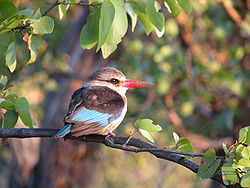 The Brown-hooded Kingfisher (Halcyon albiventris) is a species of bird in the Halcyonidae family.
 The Greater Double-collared Sunbird (Cinnyris afer) (formerly placed in the genus Nectarinia), is a small bird in the sunbird family. The sunbird breeds in southern South Africa. It is mainly resident, but partly migratory in the northeast of its range. It is common in gardens, fynbos, forest edges and coastal scrub. It lives mainly on nectar from flowers, but takes some fruit, and, especially when feeding young, insects and spiders. The sunbird is usually seen singly or in pairs. Its flight is fast and direct on short wings. The call is a hard chut-chut-chut, and the song is a high pitched jumble of tweets and twitters.
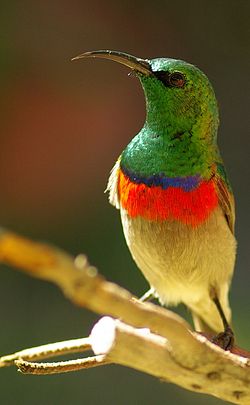 The Southern Double-collared Sunbird or Lesser Double-collared Sunbird, Cinnyris chalybeus (formerly placed in the genus Nectarinia), is a small passerine bird which breeds in southern South Africa. It is mainly resident, but partially migratory in the north-east of its range. This sunbird is common in gardens, fynbos, forests and coastal scrub. It lives mainly on nectar from flowers, but takes some fruit, and, especially when feeding young, insects and spiders. The Southern Double-collared Sunbird is usually seen singly or in small groups. Its flight is fast and direct on short wings. The call is a hard chee-chee, and the song is high pitched jumble of tinkling notes, rising and falling in pitch and tempo for 3-5 seconds or more.
 The Amethyst Sunbird, also called the Black Sunbird (Nectarinia amethystina), is a species of bird in the Nectariniidae family. Its natural habitat is dry savanna.
 The Common Fiscal (Lanius collaris) is a member of the shrike family found through most of Sub-Saharan Africa. It is also sometimes named Fiscal Shrike, as well as Jackie Hangman or Butcher Bird due to its habit of impaling its prey on acacia thorns to store the food for later consumption. It is sometimes split into two species: Southern Fiscal (L. collaris) and Northern Fiscal (L. humeralis). The Common Fiscal lives in a wide range of habitats from grassland with fences for perching to acacia thornveld or even woodland, but avoids very dense habitats where its hunting would be impaired. It gives a jumbled mix of shrike-like swizzling sounds including some imitations and a harsh Dzzzttt-dzzzt-dzzzt alarm call.
 The Southern Boubou (Laniarius ferrugineus)('ferrugineus' - rust-coloured) is a bushshrike. This family of passerine birds is closely related to the true shrikes in the family Laniidae, and were once included in that group. It frequents dense thickets in forests, mangroves, scrub and gardens. In drier regions, it is found in riverside woodland. Unlike the true shrikes, which perch conspicuously in the open, the Southern Boubou prefers to forage in dense vegetation close to the ground, a habit which has led to its being called shy and skulking. The food is mainly insects, taken from the ground or picked off vegetation as the bird creeps low in bushes. It will also take small rodents, lizards snails and fruits. The Southern Boubou has a duetted call, with a ooo-whee-ooo, followed by a whistled ooo-ooo-wheee or wheee-wheee followed by ooo-whee-ooo. The duet has many variations and the liquid ooo-whee-ooo call is often mistaken for that of the Black-headed Oriole. Its alarm call is a muted cluck.
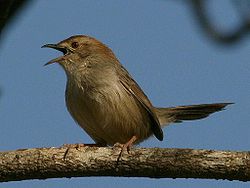 The Rock-loving Cisticola (Cisticola aberrans) is a species of bird in the Cisticolidae family. Its natural habitat is subtropical or tropical dry lowland grassland. It is usually associated with rocky wooded terrain with interspersed patchy grass tussocks. Usually at the foot of hills or in adjacent riparian vegetation.
 The Neddicky, or Piping Cisticola, (Cisticola fulvicapilla), is a small passerine bird. The common name Neddicky is used from the Afrikaans name for the species, as it is commonly known. The Neddicky is a very common bird of open woodland, including savannah with trees and open plantations of exotic species. It avoids densely wooded habitats. The Neddicky It is usually seen in pairs or singly, flitting in a bush or the grass at the base of a tree as it forages for small insects. The call of the Neddicky is a monotonous, penetrating, repetitive weep weep weep. The alarm call is a loud clicking tictictictic, like a fingernail running across the teeth of a comb.
 Saxicola (Latin: saxum, rock + incola, dwelling in), the stonechats or chats, is a genus of 15 species of small passerine birds restricted to the Old World. They are insectivores occurring in open scrubland and grassland with scattered small shrubs.
 Levaillant's Cisticola or Tinkling Cisticola, Cisticola tinniens, is a small passerine bird (though Tinkling Cisticola is also used as an alternative name for the Grey Cisticola (Cisticola rufilatus). The cisticola is a resident breeder in eastern Africa from Kenya to eastern South Africa. It is common in reedbeds, sedges, rank grass, and similar wet habitats usually near rivers or dams. Levaillant's Cisticola is usually seen in pairs, singly, or in small family parties. Flitting through the grass as it forages for small insects. It is vocal and conspicuous, perching on the top of tall grass stems and reeds and making its alarm call. The calls include a musical chrip-trrrup-trreee, a wailing tee tee tee and harsh alarm notes.
 The Hadada or Hadeda Ibis (Bostrychia hagedash), is an ibis found in Sub-Saharan Africa. The Hadeda Ibis is found throughout open grasslands, savanna and wetlands, as well as urban parks, school fields, green corridors and large gardens. It feeds mainly on earthworms, using its long scimitar-like bill to probe soft soil. It also eats larger insects, such as the Parktown Prawn, as well as spiders and small lizards. These birds also favour snails and will feed in garden beds around residential homes. It has a distinctively loud and recognisable haa-haa-haa-de-dah call that is often heard when the birds are flying or are startled, hence the name.
 The Long-crested Eagle (Lophaetus occipitalis) is a bird of prey. Like all eagles, it is in the family Accipitridae. It is currently placed in a monotypic genus Lophaetus. A relatively small eagle (about 55 cm), found in Africa south of the Sahara, except in the arid zones. In southern Africa it is a fairly common resident in the eastern areas. It inhabits woodlands, exotic plantations, forest edges and mainly lives off rodents and shrews.
 The Steppe Buzzard, B. (b.) vulpinus breeds from east Europe eastward to the Far East, excluding Japan. It is a long-distance migrant, excepting some north Himalayan birds, and winters in Africa, India and southeastern Asia. In the open country favoured on the wintering grounds, steppe buzzards are often seen perched on roadside telephone poles.
 The Forest Buzzard, B. (b.) trizonatus, is another form sometimes upgraded to a full species, though most recent authorities have placed it as a subspecies of another species, the Mountain Buzzard, B. oreophilus. This is a resident breeding species in woodlands in southern and eastern South Africa. It is very similar to the abundant summer migrant Steppe Buzzard, but the adult can be distinguished with a good view by its whiter underparts and unbarred flanks. The juvenile differs from the same-age steppe buzzard by its white front and tear-shaped flank streaks. The Forest Buzzard, as its name implies, inhabits evergreen woodlands, including introduced eucalyptus and pines, whereas the steppe buzzard prefers more open habitats. However, habitat alone is not a good indicator for these forms.
 The African Cuckoo-Hawk (Aviceda cuculoides) is a medium-sized raptor in the family Accipitridae resembling a Common Cuckoo, found in sub-Saharan Africa and along the eastern parts of Southern Africa. It prefers dense woodland and forest of either indigenous or exotic trees. It is a mostly solitary and skulking bird, flying between trees in short glides with wings held high, swooping up at end of glide and perching. It is usually found hunting in grass and low vegetation, remaining still for a while and then moving to a new spot. Its diet consists mainly of insects, with a preference for grasshoppers, but also takes small snakes and lizards, as well as birds and rodents.
 The Black-winged Kite (Elanus caeruleus) is a small diurnal bird of prey in the family Accipitridae best known for its habit of hovering over open grasslands in the manner of the much-smaller kestrels. This Eurasian and African species was sometimes combined with the Australian Black-shouldered Kite (Elanus axillaris) and the White-tailed Kite (Elanus leucurus) of North and South America which together form a superspecies.
 The Crested Francolin (Dendroperdix sephaena) is a species of bird in the Phasianidae family.
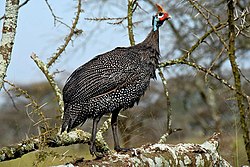 The Helmeted Guineafowl (Numida meleagris) is the best known of the guineafowl bird family, Numididae, and the only member of the genus Numida. It breeds in Africa, mainly south of the Sahara, and has been widely introduced into the West Indies, Brazil, Australia and southern France. It breeds in warm, fairly dry and open habitats with scattered shrubs and trees such as savanna or farmland. Males often show aggression towards each other, and will partake in ravenous fighting which will leave other males bloodied and otherwise injured. Attempts at making themselves look fearsome is when their wings raise upwards from their sides and feathers bristle across the length of the body, or they may also rush forwards with a gaping beak.

.jpg)


.jpg)

.jpg)
_perched.jpg)

.jpg)


_in_flight.jpg)
_in_Kawal_WS,_AP_W_IMG_1681.jpg)

.jpg)
- The area with reed and water
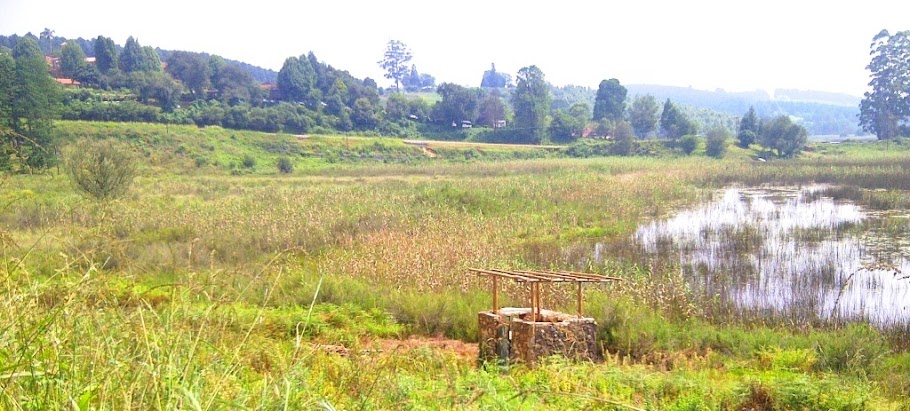
- In the reed borders of the lake, and the lake itself the following birds could be found (depending on season as well):
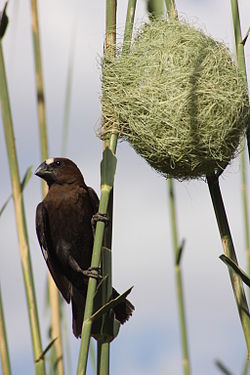 The Thick-billed Weaver or Grosbeak Weaver (Amblyospiza albifrons) is a species of bird in the Ploceidae family. It is monotypic within the genus Amblyospiza.
 The Little Rush Warbler or African Bush Warbler (Bradypterus baboecala) is a species of Old World warbler in the Locustellidae family. Its natural habitat is swamps.
 The Great Reed Warbler, Acrocephalus arundinaceus, is an Eurasian songbird in the genus Acrocephalus. It used to be placed in the "Old World warbler" assemblage, but nowadays is recognized to be part of the marsh- and tree-warbler family (Acrocephalidae). This passerine bird is a species found in large reed beds, often with some bushes. On their breeding grounds, they are territorial. In their winter quarters, they are frequently found in large groups, and may occupy a reed bed to the exclusion of almost all other birds. Like most warblers, it is insectivorous, but it will take other prey items of sufficiently small size, even including vertebrates such as tadpoles. The song is very loud and far-carrying. Its main phrase is a chattering and creaking carr-carr-cree-cree-cree-jet-jet, to which the whistles and vocal mimicry typical of marsh-warblers are added.
 The Lesser Swamp Warbler or Cape Reed Warbler, Acrocephalus gracilirostris, is an Old World warbler in the genus Acrocephalus. It is a resident breeder in Africa from the Democratic Republic of the Congo, the Chad and Ethiopia south to South Africa. This is a common species of reedbeds in standing water. The Lesser Swamp Warbler builds a deep, firm cup nest from strips of reed blades, grass and sedges, which is lined with finer grasses. It is always placed in reeds above water. The Lesser Swamp Warbler is usually seen alone or in pairs, moving through wetland reedbeds, and clambering up and down reed stems. It eats insects and other small invertebrates. The song is rich and melodious, a series of bubbly phrases that include trilling notes, cheerup chee trrreee and a large number of variations, with pauses between phrases.
 The African Reed Warbler or African Marsh Warbler, Acrocephalus baeticatus, is an Old World warbler in the genus Acrocephalus. It breeds in much of Africa south of the Sahara. It is migratory within the continent, with southern breeding population moving to the tropics in the southern hemisphere's winter. This is a common species of marshy areas, with reeds sedges or rank vegetation. When not breeding, it may enter gardens. This species is monogamous, pairing for life. The African Reed Warbler is usually seen alone or in pairs, moving through vegetation and clambering up and down plant stems. It eats insects and other small invertebrates. The song is a slow, chattering jit-jit-jit with typically acrocephaline whistles and mimicry added. It is indistinguishable from Reed Warbler except for the species that are mimicked.
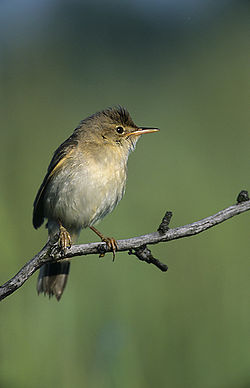 The Marsh Warbler, Acrocephalus palustris, is an Old World warbler currently classified in the family Acrocephalidae. It breeds in temperate Europe and western Asia and winters mainly in south east Africa. It is notable for incorporating striking imitations of a wide variety of other birds into its song. The Marsh Warbler breeds in a variety of mostly damp habitats, but in Africa winters mainly in dry, well-vegetated areas. It is common over much of its breeding range and expanding its distribution in some areas. However in Britain it is now virtually extinct as a breeding bird. This insectivorous warbler can be easily confused with several close relatives, but the imitative song of the male is highly distinctive.
 The Cape Wagtail (Motacilla capensis) is a small passerine bird in the family Motacillidae, which includes the wagtails, pipits and longclaws. This species breeds in much of Africa from eastern Zaire and Angola across to Kenya and south to the Cape in South Africa. This is an insectivorous bird of open country, often near habitation and water. It prefers bare areas or short grass for feeding, where it can see and pursue its prey. In urban areas it has adapted to foraging in gardens or paved areas such as car parks.
 The African Pied Wagtail (Motacilla aguimp) is a species of bird in the Motacillidae family. Its natural habitats are subtropical or tropical seasonally wet or flooded lowland grassland, rivers, and intermittent freshwater marshes.
 The Mountain Wagtail (Motacilla clara), also known as the Long-tailed Wagtail, is a species of bird in the Motacillidae family. Its natural habitat is fast-flowing streams within subtropical or tropical dry forests and subtropical or tropical moist montane forests.
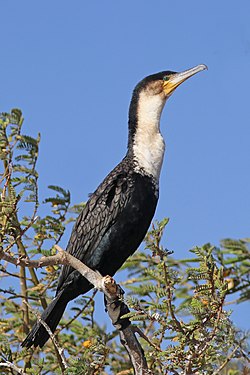 The White-breasted Cormorant (Phalacrocorax lucidus) is much like the widespread Great Cormorant and if not a regional variant of the same species, is at least very closely related. It is distinguished from other forms of the great cormorant by its white breast and by the fact that subpopulations are freshwater birds.
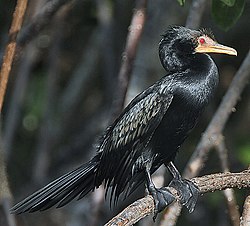 The Reed Cormorant (Microcarbo africanus), also known as the Long-tailed Cormorant, is a bird in the cormorant family Phalacrocoracidae. It breeds in much of Africa south of the Sahara, and Madagascar. It is resident but undertakes some seasonal movements. The Reed Cormorant can dive to considerable depths, but usually feeds in shallow water. It frequently brings prey to the surface. It takes a wide variety of fish.
 The Heliornithidae are a small family of tropical birds with webbed lobes on their feet like those of grebes and coots. The family overall are known as finfoots, although one species is known as a Sungrebe. Finfoots are found in numerous habitats in the tropics as long as there is water and cover.
 The Red-chested Flufftail (Sarothrura rufa) is a species of bird in the Rallidae family.
 The Buff-spotted Flufftail (Sarothrura elegans) is a species of bird in the Rallidae family.
 The African Black Duck (Anas sparsa) is a species of duck of the genus Anas. Though it likes to stay in rivers and streams during the day it prefers large open waters during the night. This duck likes water in the wooded hills of Africa and also like to hide its nests near running water.
 The Yellow-billed Duck, Anas undulata, is a 51-58 cm long dabbling duck which is an abundant resident breeder in southern and eastern Africa. This duck is not migratory, but will wander in the dry season to find suitable waters. It is highly gregarious outside the breeding season and forms large flocks.
 The White-backed Duck (Thalassornis leuconotus) is a waterbird of the family Anatidae. It is distinct from all other ducks, but most closely related to the whistling ducks in the subfamily Dendrocygninae, though also showing some similarities to the stiff-tailed ducks in the subfamily Oxyurinae. It is the only member of the genus Thalassornis. These birds are well adapted for diving. On occasions they have been observed to stay under water for up to half a minute. They search especially for the bulbs of waterlilies. From danger, they also escape preferentially by diving; hence, the namesake white back is hardly visible in life. Their habitat consists of lakes, ponds, swamps and marshes where they are well camouflaged against predators.
 The Egyptian Goose (Alopochen aegyptiacus) is a member of the duck, goose, and swan family Anatidae. It is native to Africa south of the Sahara and the Nile Valley, and has been introduced to parts of Western Europe. Egyptian Geese were considered sacred by the ancient Egyptians, and appeared in much of their artwork.
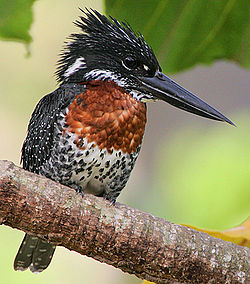 This is a largely terrestrial species, which will also perch readily on trees and buildings. Egyptian geese typically eat seeds, leaves, grasses, and plant stems. Occasionally, they will eat locusts, worms, or other small animals. They are extremely territorial and often fight with other pairs for a breeding ground. Neighbouring pairs may even kill another's offspring for their own offsprings' survival as well as for more resources. The call is a loud wak wak wak.
 The Pied Kingfisher (Ceryle rudis) is a water kingfisher and is found widely distributed across Africa and Asia. Their black and white plumage, crest and the habit of hovering over clear lakes and rivers before diving for fish makes it distinctive. Males have a double band across the breast while females have a single gorget that is often broken in the middle. They are usually found in pairs or small family parties. When perched, they often bob their head and flick up their tail.
 The Little Egret (Egretta garzetta) is a small white heron. It is the Old World counterpart to the very similar New World Snowy Egret. Little Egrets are mostly silent but make various croaking and bubbling calls at their breeding colonies and produce a harsh alarm call when disturbed.
 "Green-backed Heron" is a collective term for certain herons. Small and compact among herons, these birds often feature green plumage - rare among the Ardeidae -, in particular on the back, wings and scapulars. These herons are tool-using animals. They are regularly seen picking up objects to use as a fishing lure, attracting prey fish.
 The Grey Heron (Ardea cinerea), is a wading bird of the heron family Ardeidae, native throughout temperate Europe and Asia and also parts of Africa. It is resident in the milder south and west, but many birds retreat in winter from the ice in colder regions. It has become common in summer even inside the Arctic circle along the Norwegian coast. The call is a loud croaking "fraaank".
 The Black-headed Heron (Ardea melanocephala) is a wading bird of the heron family Ardeidae, common throughout much of sub-Saharan Africa and Madagascar. It is mainly resident but some west African birds move further north in the rainy season. This species usually breeds in the wet season in colonies in trees, reedbeds or cliffs. The call is a loud croaking.
 Moorhens, sometimes called marsh hens or river chickens, are medium-sized water birds that are members of the rail family Rallidae. They constitute the genus Gallinula. These birds are omnivorous taking plant material, small rodents, amphibians and eggs. They are aggressively territorial during the breeding season, but are otherwise often found in sizeable flocks on the shallow vegetated lakes they prefer.
 African Jacanas (Actophilornis africana) are waders in the family Jacanidae, identifiable by long toes and long claws that enable them to walk on floating vegetation in shallow lakes, their preferred habitat.
 The Red-knobbed Coot or Crested Coot, (Fulica cristata), is a member of the rail and crake bird family, the Rallidae. The Red-knobbed Coot is reluctant to fly and when taking off runs across the water surface with much splashing. It does the same, but without actually flying, when travelling a short distance at speed (to escape a rival, for example, or to dispute possession of a choice morsel). It bobs its head as it swims, and makes short dives from a little jump. It is an omnivore, and will take a variety of small live prey including the eggs of other water birds. It gives a fast kerrre like the Little Crake, a harsh ka-haa and a grunting hoot "oot oot" that suggests that the name "coot" might be onomatopoeia, but inspection of the etymology of "coot" fairly decisively negates any such suggestion.
 The Little Grebe (Tachybaptus ruficollis), also known as Dabchick, is a member of the grebe family of water birds. It is commonly found in open bodies of water across most of its range. The Little Grebe is an excellent swimmer and diver and pursues its fish and aquatic invertebrate prey underwater. It uses the vegetation skilfully as a hiding place. Like all grebes, it nests at the water's edge, since its legs are set very far back and it cannot walk well.
 The African Sacred Ibis (Threskiornis aethiopicus) is a species of ibis. The African Sacred Ibis occurs in marshy wetlands and mud flats, both inland and on the coast. It will also visit cultivation and rubbish dumps. It feeds on various fish, frogs, small mammals, reptiles and smaller birds as well as insects. This bird is usually silent, but occasionally makes some croaking noises
 The African Fish Eagle (Haliaeetus vocifer) or - to distinguish it from the true fish eagles (Ichthyophaga), the African Sea Eagle - is a large species of eagle that is found throughout sub-Saharan Africa wherever large bodies of open water occur that have an abundant food supply. Its distinctive cry is, for many, evocative of the spirit or essence of Africa. The call, shriller when uttered by males, is a weee-ah, hyo-hyo or a heee-ah, heeah-heeah.
 The Osprey (Pandion haliaetus), sometimes known as the sea hawk, fish eagle or fish hawk, is a diurnal, fish-eating bird of prey. It is a large raptor, reaching more than 60 cm (24 in) in length and 180 cm (71 in) across the wings. The Osprey tolerates a wide variety of habitats, nesting in any location near a body of water providing an adequate food supply. It is found on all continents except Antarctica although in South America it occurs only as a non-breeding migrant. As its other common name suggests, the Osprey's diet consists almost exclusively of fish. It possesses specialised physical characteristics and exhibits unique behaviour to assist in hunting and catching prey. As a result of these unique characteristics, it has been given its own taxonomic genus, Pandion and family, Pandionidae. In flight, the Osprey has arched wings and drooping "hands", giving it a gull-like appearance. The call is a series of sharp whistles, described as cheep, cheep or yewk, yewk. If disturbed by activity near the nest, the call is a frenzied cheereek!

,_ventral_view.jpg)


_from_behind,_looking_to_the_right.jpg)
.jpg)


.jpg)
.jpg)


_male_(cropped).jpg)
_male.jpg)

.JPG)

.jpg)

_Kenya.jpg)


- The Indigenous Forest
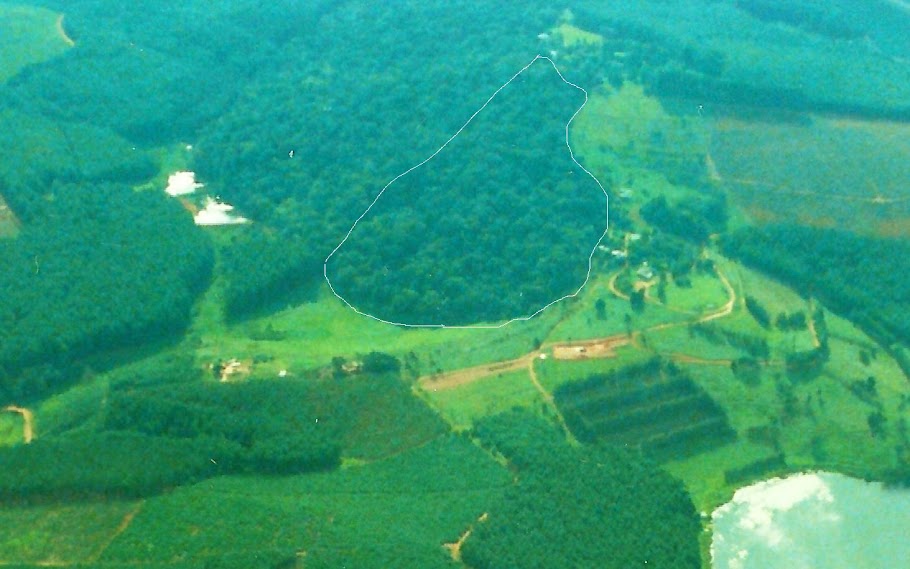
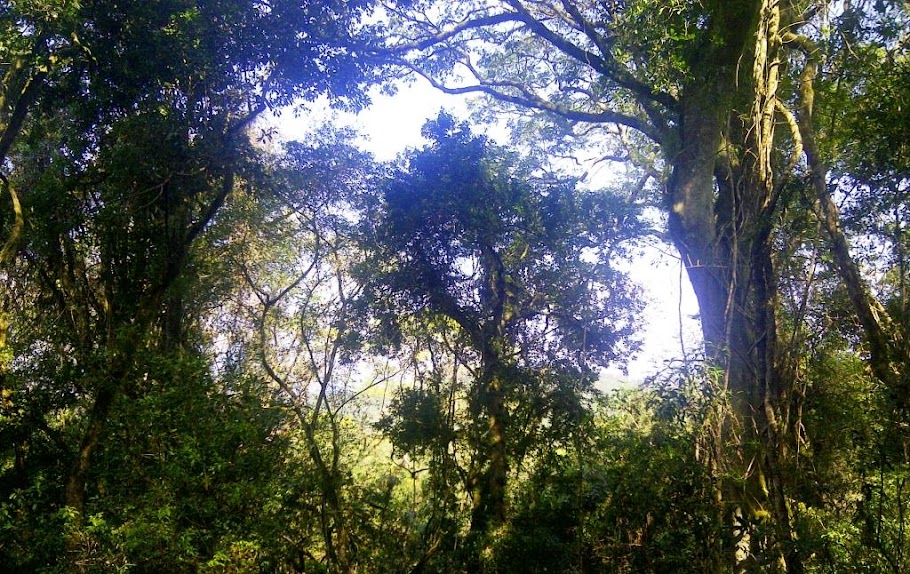
- The forest is one of the most interesting areas and has the specials. Some work to know birdcalls is helpful. In different seasons the following might be seen:
 The Black-fronted Bushshrike (Telophorus nigrifrons) is a passerine bird of the bushshrike family, Malaconotidae. It inhabits forests in Southern and Eastern Africa. It has a patchy distribution and is restricted to montane forests in many areas. It forages in the canopy and middle levels of the forest and joins mixed-species feeding flocks outside the breeding season. The song includes repeated bell-like phrases. Pairs often duet together.
 The Grey-headed Bushshrike (Malaconotus blanchoti) is a species of bird in the Malaconotidae family. It is found throughout Sub-Saharan Africa in Angola, Benin, Botswana, Burkina Faso, Cameroon, Central African Republic, Chad, Democratic Republic of the Congo, Ivory Coast, Eritrea, Ethiopia, Gambia, Ghana, Guinea, Guinea-Bissau, Kenya, Malawi, Mali, Mozambique, Namibia, Niger, Nigeria, Rwanda, Senegal, Sierra Leone, Somalia, South Africa, Sudan, Swaziland, Tanzania, Togo, Uganda, Zambia, and Zimbabwe. Its natural habitats are dry savanna and moist savanna.
 The Olive Bushshrike (Telophorus olivaceus) is a species of bird in the Malaconotidae family. Its natural habitats are subtropical or tropical dry forests, subtropical or tropical moist lowland forests, subtropical or tropical moist montane forests, and subtropical or tropical dry shrubland.
 Braun's Bushshrike (Laniarius brauni) is a species of bird in the Malaconotidae family. It is endemic to Angola. An alternative name for this bird is the Orange-breasted Bushshrike, but the English name is also used for Chlorophoneus sulfureopectus. Its natural habitat is subtropical or tropical moist lowland forests. It is threatened by habitat loss.
 The Black-backed Puffback (Dryoscopus cubla) is a species of bird in the Malaconotidae family. Its natural habitats are subtropical or tropical dry forests and dry savanna.
 The Green-backed Twinspot (Mandingoa nitidula) is an estrildid finch found in sub-saharan Africa. Green-backed Twinspot inhabits lowland moist forests of the tropical region. It may also be found in grassland and shrubland habitats.
 The Black-headed Oriole (Oriolus larvatus) is an African passerine. It has a very striking appearance with a bright yellow body, contrasting black head and flesh-coloured beak. It breeds in much of sub-Saharan Africa from Sudan and Ethiopia in the north to South Africa in the south. It inhabits dry tropical forests, especially acacia and broad-leaved woodlands, and dense shrubland areas, where it is more often heard than seen despite the brightness of its plumage. The voice is a liquid-sounding warble, accompanied by imitations and whistles. It forages in the canopy, feeding on small fruit as well as large insects. The young are fed mostly with caterpillars.
 The Orange Ground-thrush (Zoothera gurneyi) is a species of bird in the Turdidae family. Its natural habitat is subtropical or tropical moist montane forests.
 The Olive Thrush (Turdus olivaceus) is, in its range, one of the most common members of the thrush family (Turdidae). It occurs in east African highlands from Eritrea and Ethiopia in north to the Cape of Good Hope in south. It is a bird of forest and woodland, but has - locally - adapted to parks and large gardens in suburban areas. The male's song is a mix of fluted, whistled and trilled phrases, which varies geographically. It occasionally mimics other birds.
 The Kurrichane Thrush (Turdus libonyanus) is a species of bird in the Turdidae family. Its natural habitat is dry savanna.
 The Narina Trogon, Apaloderma narina, is a medium-sized (up to 34 cm long), largely green forest bird in the Trogonidae family. It is the most widespread and catholic in habitat choice of three Apaloderma trogons. The species name is Khoikhoi in origin, believed to be named after Narina, the mistress of the French ornithologist Francois Le Vaillant. The diet consists mainly of insects and small invertebrates as well as rodents and small reptiles. The call is a grating, low repeated hoot, given by males only, in defending territory or attracting mates.
 The Cape Parrot (Poicephalus robustus) or Levaillant's Parrot is a large, temperate forest dwelling Poicephalus parrot endemic to South Africa.
 The Square-tailed Drongo, Dicrurus ludwigii, is a drongo named after Baron von Ludwig. The drongos are small passerine birds of the Old World tropics. These insect-eating birds are usually found in forests or dense bush. The call is a harsh cherit-cherit.
 The Olive Woodpecker (Mesopicos griseocephalus) is a species of bird in the Picidae family.
 The African Olive Pigeon or Rameron Pigeon (Columba arquatrix) is a pigeon which is a resident breeding bird in much of eastern and southern Africa from Ethiopia to the Cape. ts flight is quick, with the regular beats and an occasional sharp flick of the wings which are characteristic of pigeons in general. The call is a loud coo coo.
 The Grey Cuckooshrike (Coracina caesia) is a species of bird in the Campephagidae family. Its natural habitats are subtropical or tropical moist lowland forests, subtropical or tropical moist montane forests, and subtropical or tropical dry shrubland.
 The Chorister Robin-Chat (Cossypha dichroa) is a species of bird in the Muscicapidae family. Its natural habitat is evergreen forests, especially in the mist belt region. The Chorister Robin-Chat is generally solitary. This Robin-Chat skulks in dense foliage in the forest canopy. In winter it may forage on ground, but usually gleans insects from leaves. It also follows other fauna in its habitat that might disturb insects, which it then hawks. Its diet consists mainly of insects, milipedes, spiders, ticks and fruit in winter.
 The Cape Robin-Chat, Cossypha caffra, is a small passerine bird of the Old World flycatcher family Muscicapidae. It is a common species at forest edges and in scrub, fynbos, karoo, plantations, gardens and parks. It prefers the cover of dense vegetation, foraging at and close to ground level, eating invertebrates, small frogs, lizards and fruit. The Cape Robin-Chat has a harsh, low trisyllabic alarm note "WA-dur-dra". The Afrikaans name name for this species, "JAN Frederik" gives the rhythm of this call, if the syllables of the latter part are run together. The song consists of variable short passages of musical notes, always starts with low slurred whistle cherooo-weet-weet-weeeet.
 The Brown Scrub Robin (Cercotrichas signata) is a species of bird in the Muscicapidae family. Its natural habitat is subtropical or tropical dry forests.
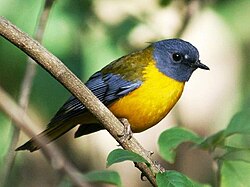 The White-starred Robin (Pogonocichla stellata) is a species of bird in the Old World flycatcher and chat family Muscicapidae. It is also sometimes more simply called the Starred Robin. It is monotypic within the genus Pogonocichla. The diet is dominated by insects, although some fruit is taken as well. The White-starred Robin gives a range of calls that vary geographically. The courtship call is sung during a display flight, and is rendered as a sustained "wiii wii wiii". The loud contact call, also used as a warning call, varies by subspecies. The first type, used by intensa, ruwenzori, guttifer, orientalis and the nominate, is a disyllabic "too-twii, the second type, used by macarthuri, helleri and transvaalensis is a more complex multisyllabic "ter-whe dada wiiyoo" or "wheh chiiyoo wher-ter-weh techiiyoo".
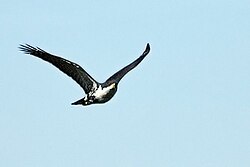 The Black Sparrowhawk (Accipiter melanoleucus), sometimes known as the Black Goshawk or Great Sparrowhawk, is the largest African member of the genus Accipiter. It occurs mainly in forests and non-desert areas south of the Sahara, particularly where there are large trees suitable for nesting; favoured habitat includes suburban and human-altered landscapes. Normally silent except during the breeding season. Males are known to make loud "keeyp" sounds while females make short "kek" sounds
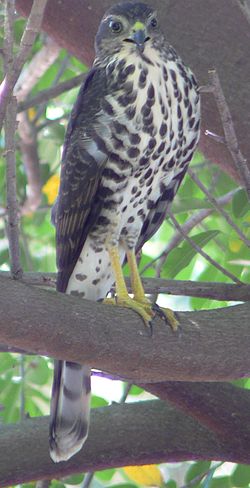 The Little Sparrowhawk (Accipiter minullus) is a species of bird of prey in the Accipitridae family. It is the world's smallest Accipiter and is possibly the smallest member of the diverse Accipitridae family.
 The African Goshawk (Accipiter tachiro) is a species of bird of prey in the Accipitridae family.
 The Crowned Eagle, also known as the African Crowned Eagle or the Crowned Hawk-eagle (Stephanoaetus coronatus) is a very large, powerful, crested bird of prey found in sub-Saharan Africa. It is the only extant member of the genus Stephanoaetus. The Crowned Eagle inhabits mainly dense woodlands, including those bordering rainforest, but will sometimes also be found in relict patches, wooded escarpments, riparian strips of Acacia, heavily wooded hillsides, and rocky outcrops throughout its range. In southern Africa, it may range secondarily into plantations, usually of eucalyptus, and (in Zimbabwe) can be found in quite open woods with Adansonia trees and may occasionally forage in savanna and secondary growth. Whilst essentially an elusive species (owing mostly to its habitat), the Crowned Eagle is highly vocal and has a noisy, undulating display flight. The male performs an elaborate rise-and-fall display, engaging in undulating steep dives, stoops and spins over the forest canopy both during the breeding season and outside it as a territorial proposition. During this display, the male is noisy, uttering a shrill kewee-kewee-kewee, and may reach heights exceeding 900 metres (3,000 ft). The voice is a series of loud whistles that rise and fall in pitch. The female may also perform independent display flights, uttering a lower kooee-kooee-kooee, and pairs are also known to collaborate in spectacular tandems, interlocking talons and falling some distance from the sky. While awaiting food at the nest, both the female and the young call out a penetrating, high kwee-kwee-kwee, that can border on incessant.
 The African Emerald Cuckoo (Chrysococcyx cupreus) is a species of cuckoo in the Cuculidae family. In Afrikaans, it is known as the mooimeisie, or "pretty girl".
 The Red-chested Cuckoo (Cuculus solitarius) is a species of cuckoo in the Cuculidae family. It is a medium-sized bird (28 to 30 cm), found in Africa south of the Sahara. In Afrikaans, it is known as "Piet-my-vrou", after its call. The preferred habitats for the Red-chested Cuckoo are woodlands. The Red-chested Cuckoo is normally seen by itself rather than in the company of birds of the same species. It is highly vocal, lives on forests and plantations and eats insects.
 The Forest Canary (Serinus scotops) is a species of finch in the Fringillidae family. Its natural habitats are subtropical or tropical moist lowland forests and subtropical or tropical moist montane forests.
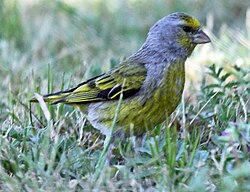 The Cape Canary (Serinus canicollis) is a small passerine bird in the finch family. Its habitat is fynbos, grassland and gardens, preferably in highland areas. It builds a compact cup nest in a scrub. The Cape Canary is a common and gregarious seedeater. Its call is tsit-it-it, and the song is warbled Goldfinch-like trills and whistles given in display flight or from a high perch.
 The Knysna Lourie, is a large turaco, one of a group of African near-passerine birds. It is usually seen flying between forest trees, or hopping along branches. It feeds on fruit, insects and earthworms. It has a loud kow-kow-kow-kow call.
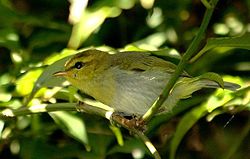 The Yellow-Throated Woodland Warbler (Phylloscopus ruficapilla) is a species of Old World warbler (the Phylloscopidae family). Its natural habitats are subtropical or tropical dry forests and subtropical or tropical moist lowland forests.
 The Bar-throated Apalis is a small African passerine bird belonging to the genus Apalis of the family Cisticolidae. It inhabits forest and scrub in Southern and East Africa from southern and eastern parts of South Africa north as far as the Chyulu Hills in Kenya. This species forages for caterpillars and other insects amongst vegetation, often forming mixed-species flocks with other birds. Pairs sing a duetting song with the female's call being higher-pitched than that of the male.
 The African Dusky Flycatcher, Dusky-brown Flycatcher or Dusky Alseonax, Muscicapa adusta, is a small passerine bird of the Old World flycatcher family, Muscicapidae. It is a resident breeder in Africa from Nigeria, the Central African Republic, Sudan and Ethiopia south to South Africa. It is very common in its woodland habitat, which includes riverine forests, evergreen forest edges and clearings, especially near water bodies such as lakes, dams and streams, and well-wooded suburban gardens. The African Dusky Flycatcher is usually seen singly or in pairs. It forages from an open perch for insects typically taking its prey in a short flight. The African Dusky Flycatcher has soft, high-pitched "tzeeet" and tsirit calls.
 The Spotted Flycatcher, (Muscicapa striata), is a small passerine bird in the Old World flycatcher family. It breeds in most of Europe and western Asia, and is migratory, wintering in Africa and south western Asia. They are birds of deciduous woodlands, parks and gardens, with a preference for open areas amongst trees. The flycatcher's call is a thin, drawn out soft and high pitched tssssseeeeeppppp, slightly descending in pitch.
 The Blue-mantled Crested Flycatcher or African Crested Flycatcher(Trochocercus cyanomelas) is a species of bird in the Monarchidae family. Its natural habitats are subtropical or tropical dry forests and subtropical or tropical moist lowland forests.
 The paradise flycatchers, Terpsiphone, are a genus of monarch flycatchers. The genus ranges across Africa and Asia, as well as a number of islands. A few species are migratory, but the majority are resident. The most telling characteristic of the genus is the long tail streamers of the males of many species. The paradise flycatchers inhabit a range of habitat types, from rainforest to montane forest, woodlands, savanna, mangroves, riparian forest, deciduous forests and bamboo groves, some species will also move into gardens and cultivated habitat. The paradise flycatchers are, as their name suggests, insectivores, feeding on a variety of insects, usually obtained on the wing. The paradise flycatchers make a range of vocalisations, these range from whistling songs to harsher calls.
 The Cape Batis, Batis capensis, is a small passerine bird in the wattle-eye family. It is a small stout insect-eating bird, usually found in moist evergreen mountain forests and wooded gorges. The Cape Batis hunts by flycatching, or by taking prey from the ground like a shrike. The song is typically a triple whistle cherra-warra-warra or foo-foo-foo.

_in_tree.jpg)
.jpg)
.jpg)


_(1).jpg)

.jpg)


.jpg)


_in_tree.jpg)
_in_tree.jpg)
_facing_left,_side_view.jpg)


.jpg)


.jpg)


The Capricorn-Letaba Birding Route stretches from Polokwane in the west to the Great Letaba River beyond the Letsitele valley in the east. The route runs just a few degrees south of the Tropic of Capricorn, mainly along the R71 road, which links the towns of Polokwane, Haenertsburg, Tzaneen and Gravelotte.
An interesting geographical feature of this route is its varying altitude. The extreme variations in altitude result in a great range of vegetation types within a relatively small area. It is within these diverse habitats that over 500 bird species are to be found. The open thornveld habitat of the Polokwane plateau supports a great variety of both Bushveld and Kalahari-type birds. Typical species here include Crimson-breasted Shrike, African Wren-Warbler, Short-clawed Lark and Black-faced Waxbill. Just before reaching the foothills of the Drakensberg and Wolkberg Mountains, one passes through the outcrop strewn Mamabolo Bushveld. These granite inselbergs hold many rock-dwelling species including the northern-most population of Southern Bald Ibis. In the Northern Drakensberg and Wolkberg sections of the route, birders enjoy vast tracts of montane grassland, which is Blue Swallow territory and houses other sought after species such as Broad-tailed Warbler, Croaking Cisticola and Drakensberg Prinia.
The afro-montane forests of Woodbush and Magoebaskloof offer amongs the best forest birding in the country with specials like Brown scrub-Robin, Black-fronted Bush Shrike, Barratt’s Warbler, Yellow-streaked Greenbul and Orange Ground Thrush. While the eastern lower slopes and valleys of Magoebaskloof prvide reliable sites for the elusive Bat Hawk and Green Twinspot.
The Tzaneen area is well known for its sub-tropical fruit industry and the interesting mix of lowland habitats here support a wide range of species including Gorgeous Bush-Shrike, White-browed Robin-chat and Purple-crested Turaco.
The Lowveld region around Letsitele and along the Letaba River has habitats including Mopani Woodland where Arnot’s Chat is resident. There are many lowveld rivers with their associated riparian forest habitats where the likes of Greater Blue-eared Starling, Red-billed Buffalo-Weaver, Retz’s Helmet-Shrike and Thick-billed Cuckoo can be found. This is also one of the prime raptor areas in the region.